
New Study Raises Questions Over Global Human Population Data
A new scientific study has raised serious concerns about global Population figures.
According to researchers, the number of people living on Earth may be significantly undercounted.
In many cases, traditional counting methods miss people.
This happens especially in rural, remote, and underdeveloped areas.
As a result, millions of individuals may not appear in official records.

Why Current Population Data May Be Inaccurate
One major issue is weak census systems.
In addition, many regions lack proper registration systems.
Because of this, data may not reflect reality.
For example: births and deaths often go unrecorded.
Similarly, people living in informal settlements are overlooked.
Meanwhile, conflict zones make data collection extremely difficult.
What the New Research Found
The study used alternative data models.
Specifically, researchers compared official records with satellite data.
They also analyzed migration patterns and regional growth trends.
The results were striking.
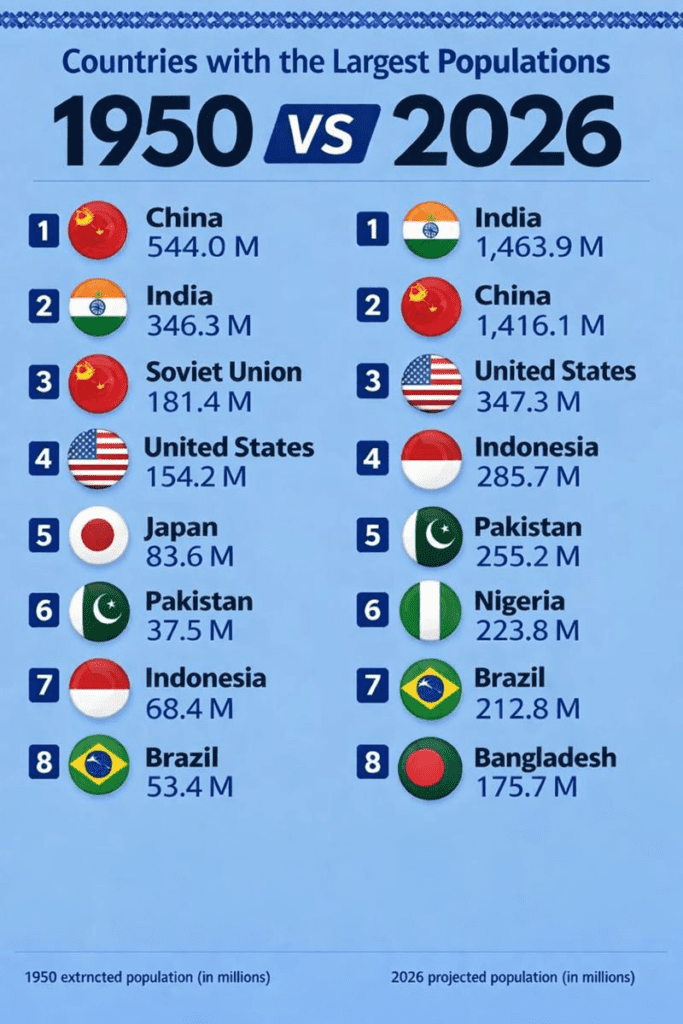
According to the findings, millions of people may be missing from official population statistics.
Why This Matters for the World
Accurate population data is essential.
Without it, governments cannot plan properly.
For instance, errors can affect:
- Healthcare funding
- Education planning
- Food security and agriculture
- Climate change assessments
- Urban development and infrastructure
Therefore, even small mistakes can cause large policy failures.
“Even small errors in estimates can lead to major policy mistakes,” one researcher said.
In other words, missing data can cause entire communities to be ignored.
What Happens Next?
Because of these concerns, scientists are calling for better systems.
They recommend:
- Greater use of satellite data and AI-based mapping
- Stronger digital birth and death registration
- More international data sharing
- Regular and transparent population audits
Ultimately, experts warn that without improvement, global planning will remain flawed.
Until then, the world may continue relying on population data that does not reflect reality.
